Tuesday, 12 January 2016

Saturday, 5 December 2015
YU Yuphoria COS 12.1 Official Update : YOG4PAS47N

Hi Everyone,
Wanted to share that 12.1 update for YUPHORIA will start rolling out from today.The update will be rolled out in phases over the coming two weeks with a host of enhanced features such as:
- Redesigned Launcher: App Drawer and Folders have been redesigned enhancing accessibility
- Smarter Screen: LiveDisplay intelligently adjusts your screen based on environmental conditions
- Calendar Together with Email: Enjoy the latest Boxer powered experience where you can seamlessly share your availability and schedule appointments
- Fresh AudioFX: The user interface has been updated for consistency across all devices
- More Playback support: Substantially increased support of codecs for video and audio playback
This update will also bring enhanced responsiveness, performance improvements and amazing thermal control to your YUPHORIA.
Software details:
Cyanogen OS version: 12.1
Android OS version: 5.1.1
Software version: YOG4PAS47N
https://youtu.be/zkRQxmK8Hfc
>
Tuesday, 1 December 2015
Just Cause 3 : Review
Just Cause 3 : Review
We’ve always admired game franchises that are self-aware about what they offer and really lean into the aspects that make them stand out. Saints Row is a good example, as it started as little more than a GTAclone with some silly humor mixed in. As the series went on, it forged its own identity by focusing on the absurd elements instead of attempting to ride Rockstar’s coattails. Just Cause seems to be following a similar path. Its first entry had its fair share of exploding barrels and a limited amount of stunt opportunities, but the game was played relatively straight-faced compared to its sequel. With Just Cause 2, Avalanche clearly took note of which elements people enjoyed from the original and introduced a lot more of it. More stunts, even more egregious barrel placement, and an awesome grappling hook that can tether items together helped make it a far more entertaining game than its predecessor. Just Cause 3 is Avalanche’s opportunity to be the Saints Row: The Third of the series, leaning as far as possible into open-world sandbox insanity.

My hopes for this outcome seemed to come true upon first assuming control ofRico Rodriguez in Just Cause 3. Right away, you’re surfing on the back of a giant cargo plane and armed with a rocket launcher with infinite ammo. Off to a good start. Within minutes of completing this first sequence, I was given two of the game’s biggest new additions - the enhanced tether and the wingsuit. Just Cause 3 doesn’t dabble and make you finish a bunch of crappy side missions to get to the cool stuff. The game patiently waits until you’re done firing infinite rockets at bad guys, and then immediately says “HEY HERE’S THIS COOL CRAP.”
That’s not to say that the game doesn’t reward you with fun upgrades as you progress. Throughout my 40+ hours with the game, I was earning new abilities, weapons, and vehicles at a steady clip by following the same basic gameplay format that was in Just Cause 2. As before, you gradually chip away at a tyrannical dictator’s grasp on an island nation by using your growing arsenal to liberate settlements. Avalanche seems to understand that narrative has never been Just Cause’s strong suit, as the cutscenes are brief affairs that involve someone telling you what to blow up. You’ll hear plenty of radio chatter about how evil General Di Ravello is, but his lack of screen time means you’ll see his image more often in the context of statues that you’re strapping C4 to or tethering to a helicopter.
The process of liberating the island is more streamlined this time around, omitting the chaos score gating from Just Cause 2 (you still have a chaos score, but it only appears to affect leaderboard rankings). Instead of any kind of currency system, weapons and vehicles are unlocked by completing missions. Once you’ve unlocked these items, they’re available at any time via the rebel drop option in your menu. With no chaos or currency in play, the only thing stopping you from calling in whatever you want, whenever you want is a cooldown timer.

It doesn’t feel like there’s much consequence to anything, which is a welcome feeling in a game that primarily serves as a vehicle for wanton destruction. With no currency or XP, there’s no penalty for dying. If you die halfway through destroying an enemy settlement, you’ll respawn with all of your progress still intact (and your ammo fully restocked). If you unlock some goofy new weapon that you want to try out, go right ahead and use it to wreak havoc on the civilian population with no penalties whatsoever. Don’t worry about being stingy on the C4, either, as your supply is infinite from the very beginning for some damn reason.
Considering that the joy I get from Just Cause lies in blowing crap up in increasingly hilarious fashion, I welcomed this “just have a good time” approach. I rarely felt frustrated by unfair checkpoints or difficult encounters, and I never felt discouraged from experimenting with some stupid way to approach a situation.
My limited moments of frustration with Just Cause 3 usually revolved around wonky physics and grappling mechanics, with Rico (or his vehicles) occasionally getting caught up on geometry in awkward ways. This was particularly annoying when participating in one of the many side activities that involve racing a vehicle. Most of these are of the standard “race your car/motorcycle/boat/plane/wingsuit through the rings in under X time” variety, while one borrows from Speed and tasks you with keeping your miles per hour over a set limit as you deliver a bomb to a target. No matter which variety of racing side mission I played, I always worried about some dumb rock or pole throwing me off course or halting my progress to the point of restarting. Most of the side missions went off without a hitch, but a few courses have annoying X-factors that you can’t really prepare for. None of these side missions feel particularly unique (others include GTA-style rampages), outside of one that I enjoyed that involves tethering a magnet to your vehicle and delivering rare materials to a drop-off point. They’re all worth doing in the long haul, however, as your progress in side missions is what unlocks new features like nitrous boosts and additional tethers/explosives.

Tethering vehicles to each other or the environment was one of the funniest elements of Just Cause 2, and the enhanced tether in this entry really opens up the possibilities, You can now shoot out numerous tethers at once, and retract them at any time by holding the left trigger. This functionality is responsible for many of my favorite moments in the game, from causing fighter jets to crash into each other to launching a dead cow cartoonishly far off of a cliff.
It’s good that causing mayhem in Just Cause 3 feels so good, because that’s what you’ll be doing for essentially the entire game. Unlocking powerful late-game jets and helicopters is cool at first, but then you realize that they’re just another way to get from settlement to settlement to destroy the same fuel tanks, generators, towers, and satellite dishes that you see ad nauseam throughout the entire game. A couple of the game’s 25 story missions incorporate some nice setpiece moments, but the majority of them don’t do much to differentiate themselves from the typical “hey, blow this thing up” routine (one odd outlier involved nothing more than driving a truck filled with wine casks for about two minutes).
For a game that's almost wholly based around creating gigantic explosions at every turn, the PlayStation 4 version of the game has a difficult time keeping up when things get really chaotic. While liberating towns or destroying especially large items, the frame rate frequently dips dramatically. I never felt like I lost control over Rico or missed shots (thanks in part to the game's generous auto-aim), but it was disheartening to see these technical issues considering how smoothly the PC version ran even during the most explosive situations.
A one-note experience isn’t necessarily a bad thing when it delivers on that one thing exceptionally well. Just Cause 3 has occasional physics problems and a lack of variety, but it’s fantastic if you just want to drop into a world and immediately start blowing it up. Upon completion of the story, you can even “re-oppress” individual settlements purely for the purpose of blowing them up all over again. It’s hard to complain about the gameplay feeling samey considering I’ve spent over 40 hours in the game and I’m still looking forward to going back and taking out more settlements. Avalanche clearly knows what this game is all about, and you should too if you want to give it a shot. If you’re aware of the game’s limitations and you’re still eager to blow an open world straight to hell, few games do it better than Just Cause 3.
Thursday, 22 October 2015
ASSASSIN CREED SYNDICATE : REVIEW
ASSASSIN CREED SYNDICATE
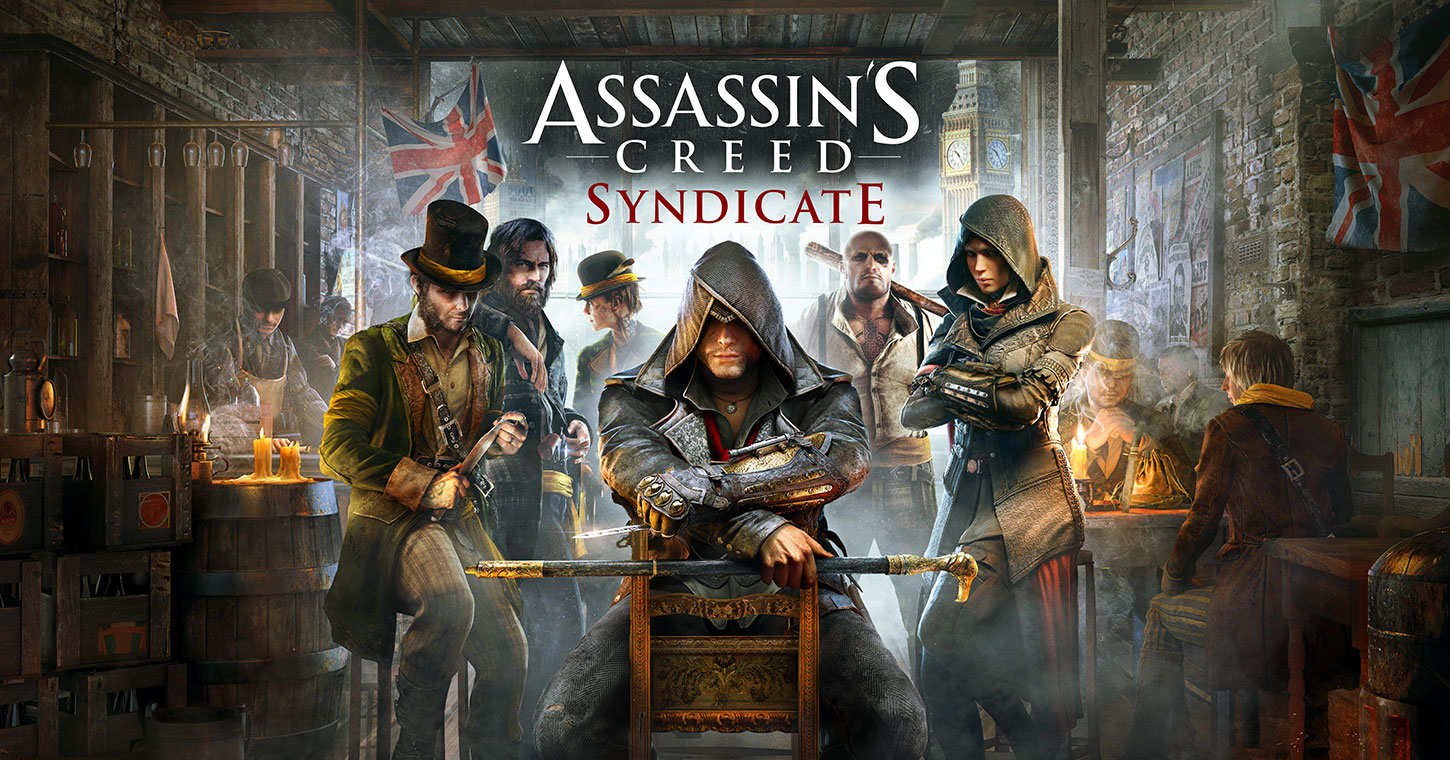
More than anything, Assassin's Creed Syndicate feels like a long-needed course correction.
Last year's Assassin's Creed Unity was by most accounts the lowest point in the franchise thus far, at least as far as the main-line games are concerned. But that low point wasn't an anomaly; it was an inevitability on the downhill slope the series has been on since 2010's excellent Assassin's Creed: Brotherhood.
As the franchise has layered on new complexities and an increasingly baffling plot, it's failed to compensate in the other direction, to clean up issues that have been lingering as far back as the first game.
Syndicate finally changes that pattern. The open-world bloat that Assassin's Creed has been known for is trimmed considerably here, leading to a more streamlined experience. Meanwhile the core world design has improved as well, shifting away from the focus on realism in its virtual London and focusing instead on playability.ASSASSIN'S CREED SYNDICATE FEELS LIKE A LONG-NEEDED COURSE CORRECTION
Assassin's Creed Syndicate sees the history-jumping series moving to Industrial Revolution-era London. Twin assassins Jacob and Evie Frye have come to the city looking to interrupt the reign of Crawford Starrick, an evil Templar industrialist who gives out marching orders to the gangs running the city's streets.
As in previous Assassin's Creed games, there's a metafictional frame to this narrative: You take on the role of a character recruited by the Assassins of modern time to play through the memories of Jacob and Evie. But Syndicate strikes a perfect balance in making those segments add meaningful progress to the overarching plot of the series without overstaying their welcome — much needed for a story that's barely moved an inch since 2012's Assassin's Creed 3.
It's nice to see things happening again with that top layer of plot, but most of Syndicate's time is devoted to a chaotic caricature of 1860s London. Jacob and Evie gather a number of allies, both fictional (an awkward assassin named Henry Green) and historical (hilariously undercover police inspector Frederick Abberline, a ghost-obsessed Charles Dickens and more). The supporting cast is better than it's ever been, full of memorable characters and sharp, witty dialogue.
Part of the praise for the dialogue also goes to Evie and Jacob themselves. Jacob is the suave, sarcastic type whose arrogance causes him to fuck up a lot; Evie is a cooler head, whose collected approach allows her to keep a close eye on her primary goal while constantly cleaning up Jacob's messes. They play off of each other perfectly.
What about multiplayer and all that other junk?
For the first time in a main release in the series since 2010'sAssassin's Creed: Brotherhood, Syndicate features no multiplayer at all — neither the unique spin on competitive multiplayer nor the cooperative play that was added in Unity. While some might miss the company of other assassins, it seems clear that the game has benefited from a focus on developing and polishing the single-player experience.
In addition to a higher quality of design, Syndicate suffers much less from the bugs and glitches that plagued last year's Assassin's Creed. I ran into a couple of crashes and enemies spawning into weird places. In one case, I fell through the world. But there was nothing on the level of the nonstop problems that Unity had.
Also absent from Syndicate: the dozens of chests and bonus features that could only be unlocked via a second-screen app or joining the Assassin's Creed Initiates group. The game now features a single option in the menu to log in to a "Ubisoft Club" account and unlock a few extras, but it never pushes it on the player. And despite still having the ability to purchase in-game currency with real money, Syndicate never feels miserly. I finished the game with 80 percent completion in around 30 hours, and managed to hit max level, purchase all gang upgrades and do most of the crafting I wanted without ever even considering buying extra material with real money.
It's also notable that despite having an already announced paid downloadable add-on, Syndicate has plenty of meat on its bones. There's one particularly cool and lengthy segment I won't spoil that absolutely struck me as the kind of thing that Ubisoft would normally have tried to section out and sell as DLC. Hopefully this marks the beginning of a more outwardly consumer-friendly attitude for the series.

While discussing the story, I'd be remiss not to give special mention to antagonist Crawford Starrick, and Syndicate's general approach to villains. There are plenty of no-name assassination targets who get quietly taken out and forgotten over the course of Assassin's Creed Syndicate. But the game also spends a lot of time building up three or four of the main bad guys, especially Starrick, who perfectly embodies the Templars' superficial care for the greater good amid overtly homicidal actions.
Of course, Jacob and Evie have some homicidal tendencies of their own. As has become usual for Assassin's Creed, Syndicatetakes place in an open world where you take on specific missions, often choosing whether to approach using stealth or take a more action-oriented path.
While story missions are much longer and have much more unique objectives, the more generic and less exciting Assassin's Creed goals are relegated to side tasks that will free territory from Templar control. Assassin's Creed has featured territory control elements before, but they're handled particularly well in Syndicate. They're totally optional, and I found myself using them as a cooldown between more intense tasks.
The main assassination missions are where Syndicate really shines. They place you into larger-than-life settings — the Bank of England, the Tower of London, Lambeth Asylum, etc. — and provide you with a variety of potential ways to get close to and take out your target. If you want to run in and clumsily kill everyone in sight, Syndicate will allow it, in most cases. But you can play it more carefully, sneak around, find hidden entrances, knock out guards for disguises and more. There are also unique assassinations you can pull off in each of these main missions, if you're especially crafty.
My favorite unique assassination? When I pretended to be a corpse so that I could get wheeled in to kill an evil doctor giving a live medical lecture.
/cdn0.vox-cdn.com/uploads/chorus_asset/file/4187351/acs-tall-1.0.jpg)
Both the story missions and the open-world activities work better than they otherwise would because of how smartly Syndicate's world is designed. With previous releases, it's often felt like the series prides itself on historical authenticity first and foremost, often to the detriment of the actual moveset and animations of the characters in the games. This came to a head inAssassin's Creed 3 and has persisted in every installment since, where the main characters constantly felt like they were tripping over things in the environment.Assassin's Creed Syndicate has cleaner streets and rooftops, more direct paths between areas, and a slightly simplified control layout that makes it easier to differentiate between when you're trying to move up a building or jump down to the street below.
Syndicate also benefits from the introduction of a fantastic new means of traversal: the grappling hook-esque rope launcher. The rope launcher works both vertically and horizontally, letting Jacob or Evie quickly scale to the top of a building or cross a wide street without touching the ground. While this clearly takes heavy inspiration from similar devices in other open-world games, it's a brilliant addition to the Assassin's Creed arsenal.
Despite all the upgrades and fixes in Assassin's Creed Syndicate, there are a few annoyances with the series' control scheme that haven't been ironed out yet. For example, the button mapped to interact with things in the environment is the same button that, when you hold down the left trigger, tells your assassin to free-run in a downward direction. I can't tell you how many times I tried to tap that button to open a chest and instead watched my chosen Frye hang precariously off a ledge or leap into a nearby body of water.
But unlike the last few Assassin's Creed games, these annoyances rarely if ever get in the way where it matters. I never found myself bumbling around the spaces in Syndicate — or, at least, when I did, I never felt like the game was at fault. Syndicate's environments maximize feeling like an unstoppable assassin and downplay the awkwardness that has consistently accompanied the franchise's complicated controls and animation.
WRAP UP:
SYNDICATE PUSHES BACK THE CRUFT THAT HAS COLLECTED AROUND ASSASSIN'S CREED FOR YEARS
That's really Assassin's Creed Syndicate's biggest triumph: It pushes back against the collected cruft of eight years of releases and spinoffs, an imposing accumulation of mechanics and lore and expectations. Syndicate doesn't get everything right. It doesn't solve all of the series' problems, and at this point, I'm not sure if any one game could. However, it's the first step in a uniformly positive direction that the franchise has taken in years.
Tuesday, 7 April 2015
Wednesday, 3 December 2014
Assassin's Creed Unity review
Assassin's Creed Unity review

Story

Assassin's Creed Unity's story is as much a coming of age story as it is a sweeping romance set in a backdrop of Paris's slow descent into madness. Young Arno Dorian watched his father die and met the love of his life, Elise, on the same day. Adopted by Elise's family, Arno is a likeable, roguish stable boy who is on the path into the Brotherhood of Assassins courtesy the tides of love and revolution . All of this is perfectly voice-acted, even though many of the characters have sharp English accents.
Arno himself is very much like Ezio from Assassins Creed III and Edward from Assassins Creed IV. In fact, Arno's later introduction is very reminiscent of Ezio's as he's accused of stealing and is pursued by thugs.
There's nothing new about the tale of Assassins Creed Unity. Even as Arno makes his way up through the ranks of assassins, you feel you have read or heard this story many times over. Though the romance between Elise and Arno does have its sweeping highs, the story just tapers into background noise after a point. This is good in a way as Arno serves as a device to lead you into the bigger picture.
What the story does right is get you riled up, watching the overflowing opulence of the upper caste Parisians and the growing anger of the peasant class. All this leads up to the horrific guillotine executions that still resound throughout history. Ubisoft has rendered Paris in such amazing detail, you feel completely transported in time, right into the heart of the revolution.
Gameplay

At its core, Assassin's Creed Unity feels like every other Assassins Creed game out there, which is disappointing. That's not to say there are not a lot of new things, but a lot of them are focused more on making the game feel more realistic that updating the gameplay.
The Parkour, freerunning element has gotten the best and biggest update of the lot. Barring a few glitches, Arno just seems to flow over the environment as he vaults over edges, runs across rooftops and does slight wall runs to grab adjacent hand holds. It's just incredible. You can also freerun down with another button, allowing Arno to do a controlled descent. This more than makes up for a lot of the flaws of the game.
One annoying feature of most Assassin's Creed games was the stealth mechanics, where you could only crouch and hide in certain areas. Taking a page out of Watch Dogs and Splinter Cell, Assassin's Creed Unity now has a new cover system as well as the ability to crouch and walk anytime. However, the controls can get a bit sticky at times.
The combat system is changed a bit to include more of a fencing style; however, it's rickety at best. There were times we could not tell when we are supposed to parry and there were times where it feels like hits were just not connecting. Add to that glitches like enemies clipping into your character and you've got a mess.

There were times I parried, but the animation of the sword was pointing in the wrong direction, which is shameful because an Assassin's Creed clone Shadow of Mordor did combat so well; in the latter, you can feel the power of your character's sword-strokes as you can cut through swathes of enemies with precise control. At best Assassin's Creed Unity's combat feels clunky. We sincerely do hope Ubisoft will fix this in upcoming patches.
Assassin's Creed Unity does not break away from the usual bunch of mission types. You still follow targets, eavesdrop, chase and perform the occasional assassination, but now you get to solve murders too. With a game overhaul, it would have been nice of Ubisoft to mix things up a little more. However, to be fair the, game does give you a lot more freedom on how you can go about your mission. Earlier there were just external buildings you can traverse, but in Unity you can enter certain interiors through open windows.
Assassination is a lot better this time around as well, with you feeling a lot more like an assassin. You will actually need to case the scene, prepare you kill and see the multiple routes to go in, kill and get out in one piece, preferably with the head still attached to said piece. You can either sneak in unnoticed or create distractions or go in sword swinging, taking down guards and target alike.
One annoying factor is the crowds. Sure, it fills you with awe watching the angry mobs from a rooftop. However, on any mission, be it a chase or a sneak, there are milling crowds of people getting in your way. It just gets annoying watching bumbling peasants wearing ridiculous pink and white dress shirts get in your way as your target happily traipses around the crowds to get away from you.
Graphics

Assassin's Creed Unity is one of the best looking games out there to date. Every turn, every corner is so detailed that you have to blink twice and remind yourself that it's not real. The detail in the textures is staggering, stones on a building are varied in style and not just a repeated tile. The ground is mucky in places and dusty near market areas. The crowds look great, as the game distinguishes each member with an astonishing amount of details. Later in the game the crowds are just plain malevolent entities, walls of angry peasants.

All of the famous Paris architecture are rendered in exquisite detail. You can not only visit but also climb to the top of monuments like Notre Dame and Eiffel Tower. Everything just looks amazing. Picture perfect. Interiors of buildings are equally detailed, with gold trimmings along the walls, paintings on the ceilings and old French furniture in the room. Assasin's Creed Unity is just a feast for the eyes.
The animations are very realistic too, marked by Arno's fluid and real movements. Little details in the parkour animation add to the realism, for example, when running over rooftops, Arno seems to accelerate and decelerate on the slopes of the roof; when running he goes into a controlled slide before vaulting easily and hanging off the edge.
Everything about Assassin's Creed Unity will make your jaw drop. Everything. Though such beauty comes at a price. A steep one. Even at 900p on the PS4, the game's framerate drops regularly, especially in places where there's a lot of crowds. Managing so many animations is taxing on even next-gen consoles.
Unity has quite a lot of glitches. While we just experienced weird hair movements, odd character floats with a healthy serving of clipping and we fell under the map several times. However, there's the now-famous kissing glitch, where users took screenshots of a passionate kiss between Arno and Elise, except that Arno just had hair, eyeballs and teeth, nothing else.

The PC version undoubtedly looks the best, but to run it at 1080p with all effects on you will need a juggernaut of a card. At least a Nvidia Geforce GTX 680 and above, an i7 and above processor and a lot of RAM. Those who have beefy PCs will get the best of Assassin's Creed Unity.
Conclusion
Assassin's Creed Unity feels a lot more like a glorified tech demo than an actual full fledged game. A decent game that needs a lot of patching up from Ubisoft. That said, what it gets right turns out to be great. There's good Parkour and stealth with the revolution bursting through the seams. Of course, this is the best looking game out there and has raised the bar graphically extremely high for games.
Call of Duty: Advanced Warfare Review
Call of Duty: Advanced Warfare Review

PROS
Depth-of-field effects
looks good in 4K resolution
Multiplayer mode is good
Smart grenades
CONS
Minimal multi-level gameplay
Drones could have been better
Our Verdict
Call of Duty: Advanced Warfare is at the pinnacle of its genre now. The production values are brilliant, the acting quite comparable to anything we’ve ever experienced before (in-game or otherwise) and whatever little is lacking is more than made up for by Kevin Spacey’s very presence. Now if only they’d managed to rope in Tom Cruise and Emily Blunt, what a movie game this would have been! The exo-suits and a few new gadgets add a welcome amount of depth to the otherwise formulaic multiplayer experience and there’s a lot of fun to be had, if you’re willing. This is the best Call of Duty game since Modern Warfare and deserves a spot on every gamer’s bucketlist
Gadget Deals
It’s hard to describe the joy of playing a good Call of Duty game again. Ten years of bland, generic sequels have left us more than a little disheartened with the franchise. The games have been nothing more than gloomy click-fests that the die-hard fans among us try to get through in the hopes of catching a glimmer of that combination of spectacle, pacing and gameplay that made Modern Warfare (and United Offensive before it) such a great and memorable game.
So what’s different this time around? Well, for one thing, Kevin Spacey. Any semblance of a story, or lack thereof, is more than made up for by Spacey’s very presence and ruthless charm; it’s a major factor in bringing this game to life. You can’t help but see him on-screen and get drawn in by his persona. It doesn’t matter that he really doesn’t have a big role in the game (he is the villain, but he’s not even as memorable as 343 Guilty Spark) and that you rarely interact with him outside of cutscenes. The other thing that’s new is the exo-suit; it’s the first time, since Modern Warfare, that we’re actually introduced to something that has the potential to drastically affect the way we play and the best part is – it doesn’t suck

Spectacle
The true heart of a CoD game has always been spectacle, those moments that make your jaw drop and go, “That was awesome!” The franchise has, off-late, gone very over-the-top with that aspect and the recent glut of superhero blockbusters have spoilt us silly, but CoD still manages to illicit more than a few “oohs” and “aahs”. Never before have we actually been happy to say that a game is an interactive movie.
The game is simply gorgeous and, as befitting the oodles of graphical goodness, the system requirements are understandably high. We found our systems regularly running low on RAM (with 8GB onboard) and loading screens took up an inordinately long time on anything but the highest-end of systems (an Intel 3960x with HyperX beast RAM and a couple of SSDs).

For those who have such fancy systems, this is the game that makes that investment worth it. Of particular note are the extremely high-resolution textures that look fantastic on even 4K systems. The depth-of-field effects bring cut-scenes to life in a cinematic art-style that’s worthy of the best of cinematographers and are also exceptional.
If there’s anything we have against the cinematic cut-scenes, it’s that random quick-time-events just ruin them. Sections where you’re not shooting should just be played out by the game with you as a passenger, it would be more immersive and definitely less tedious.
Introducing: The Exo-Suit
The real star of the game is the Exo-suit (Exo from now on). CoD games have always been elaborate turkey shoots, good ones of course, and what the Exo does is give you the ability to perform trick shots. In single-player, the exo isn’t that much fun. It’s alright, fits in with the general theme, lets you hop around the map and over obstacles and lets you hover over gaps, etc., which is good, but you’re given all that power and are only allowed an atrophied brain and a claustrophobic sandbox to play in. As with any CoD game, creativity is severely punished and you’re only allowed to use your abilities when the game tells you that you can. Of course, you can double-jump up the occasional staircase or over the occasional wall, but that’s really as far as your Exo-abilities truly take you in single-player.

It’s very apparent from the mission design that the levels weren’t really designed with multi-level gameplay in mind, except as gimmicks. There are one or two missions where you really feel like you can put your Exo’s abilities to good use, but they’re so few that by that time, you don’t really care.
When it comes to multiplayer however, the Exos come to life. Instead of running and gunning, you can now run-and-gun-and-jump-and-boost-and-shield-and-cloak and do so much more and it’s all good fun. You get to choose the type of Exo you want, be it one designed for speed and extended sprinting or one designed to absorb damage for the slightly tankier among us. It’s easy to customise the suit and your build to suit your play style and quite frankly, you’d better. Higher-level players are quite hard to take down, not because they have better gear, which they do but because they’ve customised their suit to take advantage of their play style and they know how to use it.

Too SMART?
Advanced Warfare has done a really good job of showcasing, well, advanced warfare. You really feel like you’re in a battlefield of the future, what with the drones popping up all over the place, the “threat” grenades, your Exo, SMART grenades, wonky looking tanks and walkers and more. The problem here is that Sledgehammer games either went too far or didn’t go far enough.

Take the grenades for instance, they’ve always been something you hurl at an enemy and run. Now, you throw a grenade, watch it try to hover while it performs a maniacal dance and then direct it to an enemy. It looks cool, but it’s too cumbersome. The threat grenades (they highlight enemies through obstacles) and EMP grenades (for taking out Exos and drones and other electronic devices) are actually grenades that you hurl by first pressing “Q” and then cycling through grenade types by pressing “F”. It’s too complex and is definitely not something you want to do mid-battle. We rarely found ourselves switching grenades during the campaign, and they’re even less significant in multiplayer for this very reason. Speaking of which, multiplayer is bucket loads of fun. There are issues with matchmaking and pings can be bad, but we’ve rarely had this much fun in a CoD game.
Call of Duty: Drone Warfare
It has to be said, a more plausible argument for drone warfare couldn’t have been made better than in CoD. The drones are smart, as deadly as a pack of ravenous chiwavas and creatively implemented. The blowing up of the Golden Gate Bridge for example, was one of the finest examples of possible drone use that we’ve seen, it’s too bad that there aren’t enough of such moments. In fact, the one major argument against the drones is that they’re just not dangerous enough. They’re more like the aforementioned chiwavas which will, only if given enough time, eventually wear you down. It would have been so much cooler if you had drone swarms darkening the sky and unleashing a hail of bullets or clamping on to enemies (even you) and detonating or any of a myriad of such scenarios.

To be fair though, it’s testament to the game’s design that the drones seem as natural to the environment as a gun to a battlefield – they seem inevitable - See more at: http://www.digit.in/gaming/call-of-duty-advanced-warfare-review-24644.html#sthash.I9pQu12h.dpuf
Subscribe to:
Posts (Atom)